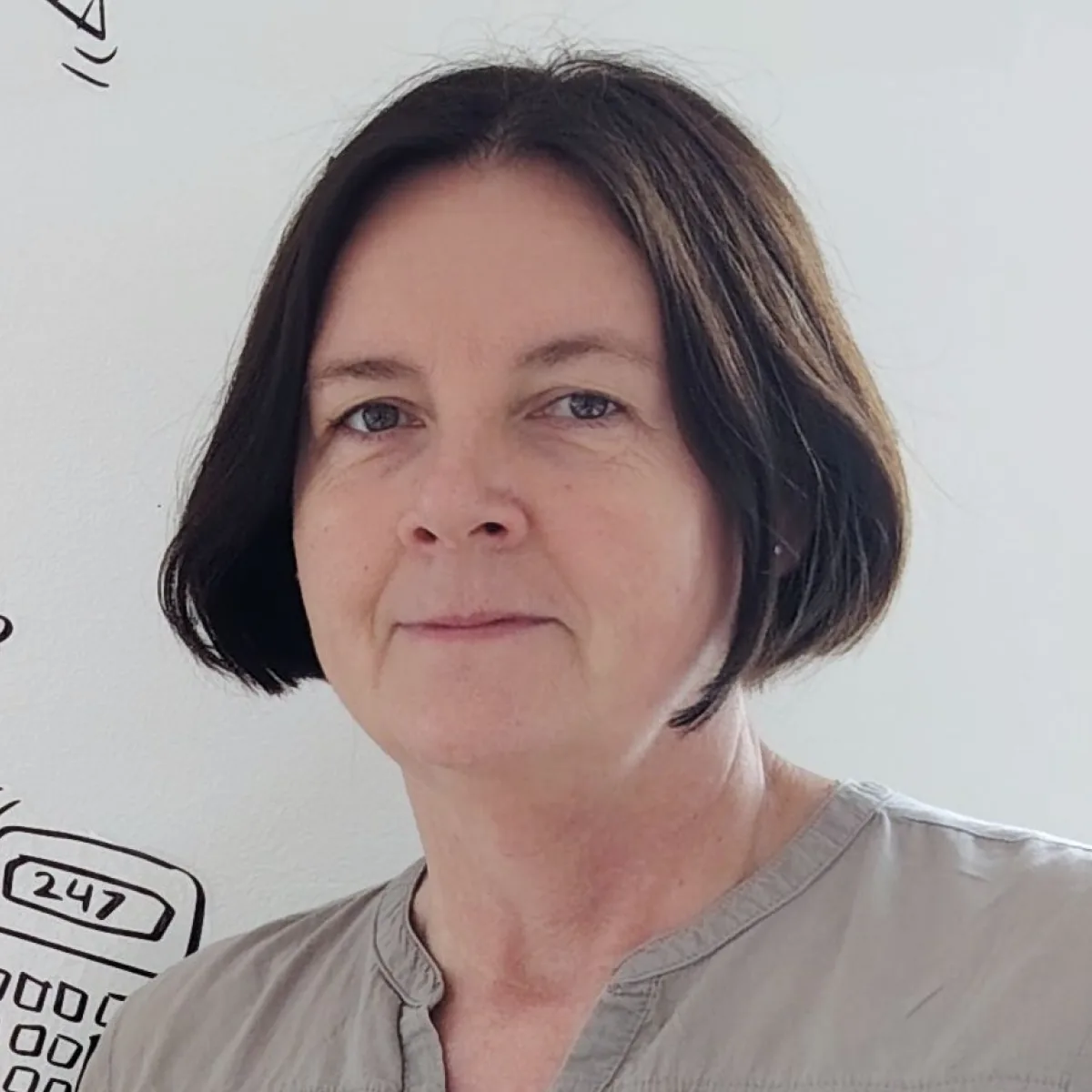
Éva is a maths (and former chemistry) teacher at a music-focused elementary school in Hungary, where she has taught for ten years. She is a digital pioneer in her faculty — having built a city-wide professional working group, completed two master’s programmes focused on digital competence, and been recognised for her work building a digital task bank. She has been using digital teaching tools for over two decades, and Redmenta since around 2018.
For Éva, the challenge wasn’t reluctance — it was scale and depth. She had already invested years building handwritten, then typed, then digitally formatted assessments and question banks for maths and chemistry. The effort was enormous and continuous. The real breaking point was academic integrity: as AI tools became accessible to students, cheating during digital assessments became a growing problem. “As students became more skilled and AI emerged, preventing cheating became an increasingly greater challenge.” She also wanted smarter, faster ways to identify gaps in student understanding — not just scores, but insight.
Redmenta’s window-monitoring feature became a turning point. Éva used it innovatively — turning a lesson into a “scientific experiment” where she asked students to try to fool the system, then showed them what she could see on the teacher dashboard. This built digital literacy and academic responsibility simultaneously. She also uses Redmenta across a wide range of use cases: AI-generated practice exercises, assessments linked to images and diagrams, and ongoing preparation for competitions (including a 10th-place national ranking in the Darts Maths programme). As a digital champion, she regularly introduces colleagues to Redmenta — going into their classrooms, building the worksheet alongside them, and sharing the results. Her master’s programme evaluators described her as a teacher who is “strict and consistent, yet liked and accepted by the majority of students.”
“It makes lessons more creative and assessment far more effective. I see completely different information on the teacher dashboard than when I walk around looking at notebooks. Digital feedback gives a much more accurate picture of student work.”