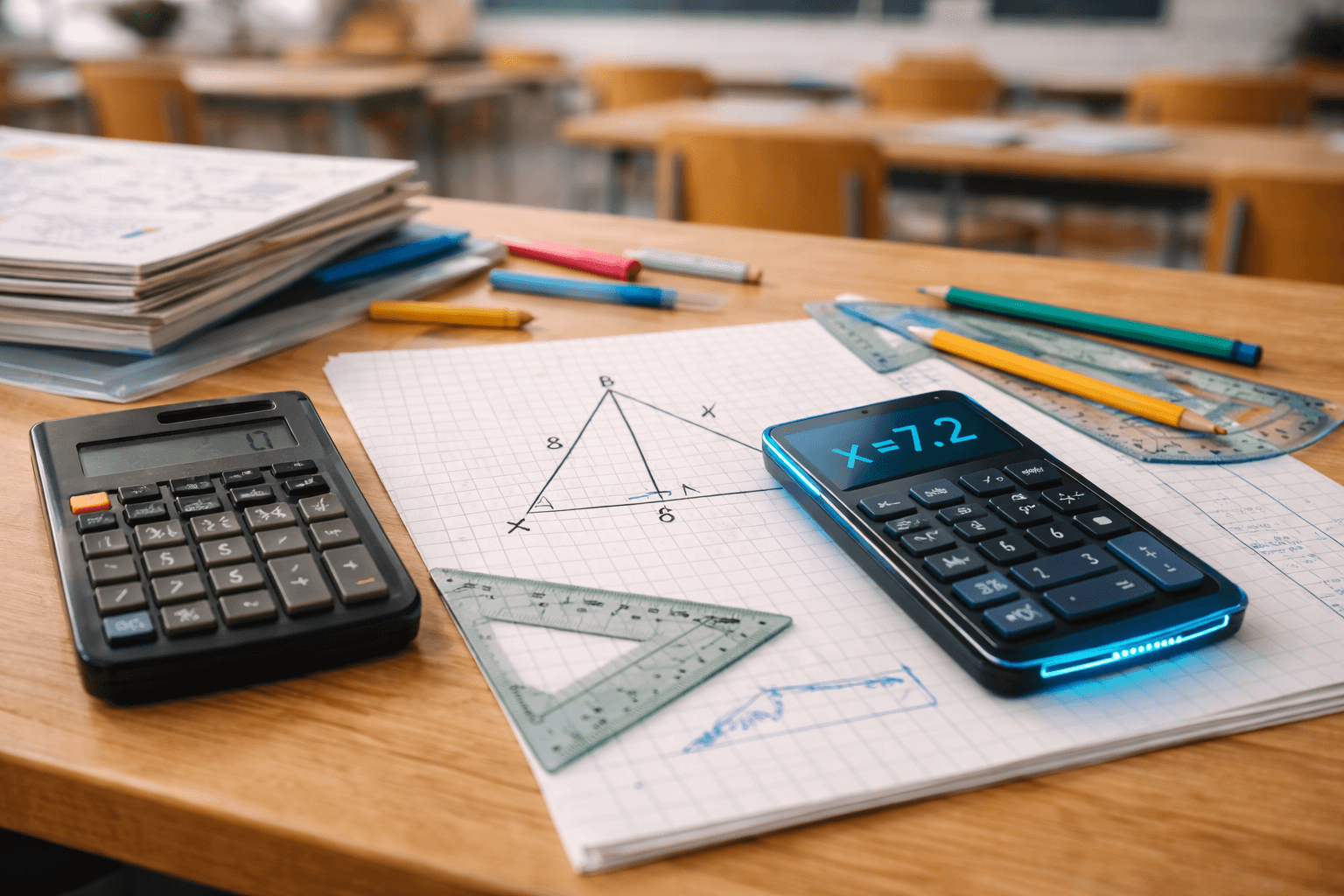
For decades, educators have imagined technology transforming mathematics learning. Yet, in most classrooms, math instruction still looks and feels the same.
AI can change that, but only if we use it intentionally.
AI isn’t only about faster grading, automated problem generation, or instant feedback. Those are helpful, but they miss a deeper opportunity: reshaping how students experience mathematics altogether.
Because math is more than numbers and rules. Math is not only about correct answers. It builds:
These competencies sit at the core of deep mathematical understanding and long-term retention. However, it’s a big challenge for teachers to develop them, because designing meaningful visual tasks demands time most lesson planning simply cannot afford.
Schools and teachers can already use AI to support math instruction in practical ways:
AI can generate variations of tasks, adapt difficulty, and align to learning targets—reducing hours of manual preparation.
Students can receive step-by-step hints, explanations, or reflection prompts—allowing teachers to focus on analysis and intervention.
AI can support teachers in moving beyond procedural drills by helping generate contextual problems, real-world examples, and reasoning prompts.
Dynamic task generation allows students to move at different speeds without overwhelming teachers. These uses are important but they still reinforce a classroom dominated by text and procedure.
To unlock deeper learning, AI needs to support the visuals of math.
Students learn differently when they can see the math.
Think about it:
But creating these visuals takes time and most teachers simply don’t have enough of it. Scaling that works across classrooms or schools? Nearly impossible.
This is where AI can change the game.
Redmenta’s latest innovation, the Math Task Illustration brings visuals into tasks automatically, not as extras, but as an essential part of learning.
When Redmenta generates a math task, it can now:
This shifts AI from automating answers to supporting representation, reasoning, and interpretation, the core of mathematical understanding.
We’re excited to see K–12 students sketch, explore, and make sense of numbers and shapes in ways that feel natural and for primary and secondary teachers to finally have the time and tools to make those moments happen.
It’s not about replacing human expertise; it’s about removing the small barriers that get in the way of big learning. When students can see math, they start to think about math differently. And that’s exactly the kind of classroom Redmenta wants to build.


